The Origin of Our Dating Systems: Anno Domini VS Anno Vulgar
Malachi
- February 4, 2026
AD is often mistranslated off the tongue to “after death” in reference to our Lord Jesus Christ’s death and resurrection.
Forewarning, this is a lengthy article but it’s a big puzzle and we’re putting the pieces together. If you’re into that kind of thing, this is the space for you, welcome! Let’s get into it.
The correct translation of ‘AD’ is Anno Domini, meaning Anno – “in the year” Domini – “of our Lord”. Often times, there was a distinct “I” or “J” attached to the dating, the I or J represents “Iesu Christi” meaning, Jesus Christ.
The original phrase which is not commonly known today is “Anno Domini nostri Iesu Christi” which is a Latin phrase translating to “in the year of our Lord Jesus Christ.” “It is the full, original phrase behind the abbreviation AD (or A.D.), used to number years in the Julian and Gregorian calendars, marking time from the traditionally acknowledged birth year of Jesus.”
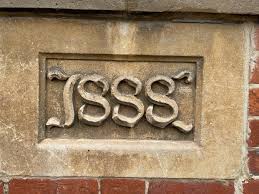


It translates directly to English as:
“In the year of our Lord Jesus Christ”
- Anno = “in the year” (ablative case, indicating “in the year”)
- Domini = “of the Lord” (genitive of Dominus, meaning Lord/Master)
- nostri = “our” (possessive, first-person plural)
- Iesu Christi = “Jesus Christ” (genitive form; Iesus Christus in nominative)
This longer form emphasizes a Christian perspective: years are counted in the era belonging to “our Lord Jesus Christ”.
Prior to this era attributed to Jesus Christ was the “Era of the Martyrs”, (Latin: anno martyrum or A.M., sometimes called the Diocletian era or anno Diocletiani) this time period refers to a specific Christian calendar system used primarily in the early Church, especially in Egypt.
The era begins with the accession of Roman Emperor Diocletian on November 20, 284 AD (Julian calendar), with year 1 officially starting on August 29, 284 (the Alexandrian/Egyptian New Year, 1 Thoth).
Note, Thoth was an Egyptian deity, revered as the god of wisdom, writing, magic, science, and the moon. Thoth’s religious and cultural influence spanned from the earliest dynastic periods through the Roman era. The Egyptian civil calendar consisted of 12 months, each with 30 days, plus the 5 days introduced by Thoth. Therefore, the Egyptian calendar was attributed to this false God.
Diocletian launched his Great Persecution (or Diocletianic Persecution) starting in 303 AD, the most severe and systematic empire-wide campaign against Christians up to that time.
Thousands were tortured, executed, or forced to sacrifice to the Roman’s pagan gods. Early Christians in the Church of Alexandria (Egypt) reframed this starting point in a positive light as the “Era of the Martyrs”, to honor their brothers and sisters rather than glorify their persecutor, who was anti-christ. It became a way to commemorate the faithfulness and sacrifice of believers during tribulation.
From the 4th century AD onward, the Church of Alexandria used this era in official documents, Easter tables (computus for determining the date of Easter), and chronology. It was the standard for dating in Alexandrian Easter calculations before the western monk Dionysius Exiguus created the Anno Domini system in 525 AD.
Dionysius deliberately replaced the Era of the Martyrs/anno Diocletiani with anno Domini nostri Iesu Christi, to avoid memorializing a “tyrant” who persecuted Christians and to focus time on Christ’s incarnation/birth instead.
Dionysius’ AD system (starting from what he calculated as year one being Christ’s birth) took over in the Latin West, popularized later by Bede (8th century), and eventually became dominant in Europe.
He used it in his Easter tables for dating purposes in the Christian calendar.
Over time, the full phrase got shortened to just “Anno Domini” (“in the year of the Lord” or “in the year of our Lord”). By the early Middle Ages, AD became the standard way to label years in the Western world. The counterpart for years before that point is BC (“Before Christ”), though the original Latin equivalent was something like ante Christum natum (“before the birth of Christ”).
On a very different note, “the Eastern Byzantine Empire (also called the Eastern Roman Empire) primarily used the Byzantine calendar, known as the Creation Era of Constantinople, the Era of the World (Greek: Έτη Γενέσεως Κόσμου κατὰ Ῥωμαίους or Έτος Κόσμου), or simply Anno Mundi (AM, “Year of the World”).”
“This system dated years from the presumed creation of the world as calculated from the Bible (specifically the Septuagint Greek version of the Old Testament), rather than from Christ’s birth like the Anno Domini (AD) system in the Latin West. The date of creation was fixed at September 1, 5509 BC (Julian calendar), running to August 31, 5508 BC as Year 1 AM. This made Jesus’ birth (or incarnation) occur in 5509 AM.”
“Eastern Orthodox tradition, which prioritizes the Septuagint over the Masoretic Text, developed a calendar based on the Septuagint’s genealogies. Scholars used the Septuagint to calculate the “age of the world” (Anno Mundi), placing the Date of Creation at September 1, 5509 B.C. To this day, the Eastern Orthodox Church begins its liturgical cycleon on September 1st.”
In The First Book of Adam and Eve (also known as The Conflict of Adam and Eve with Satan), God promises to come in the flesh to save Adam after 5,500 years. This promise is made to comfort Adam in the Cave of Treasures after having been cast out of the garden, pledging that God will become flesh of Adam’s seed to deliver him and his seed from death.
Theological tradition linked the harvest season (the “end of the year” in Exodus 23:16) with the world’s completion and Adam’s creation. This also aligned with the start of the indiction cycle (a 15-year tax/administrative cycle introduced under Emperor Constantine and formalized by Emperor Justinian I).
| Basis | Primary Text | New Year Month | Significance |
|---|---|---|---|
| Religious/Biblical | Septuagint & Masoretic | March/April | Redemption (Passover) |
| Orthodox Liturgical | Septuagint (Byzantine) | September | Creation & Church Cycle |
| Modern Jewish | Masoretic/Talmudic | September | Civil Year (Rosh Hashanah) |
The full Creation Era was formalized in church contexts around the late 7th century: adopted by the Sixth Ecumenical Council (680/681) and first officially used in the Quinisext Council (692, or 6200 AM).
It became the official imperial calendar from around 988 (during Basil II’s reign) until the fall of Constantinople in 1453 (which the Byzantines dated as 6961 AM).
“It was also used in the broader Byzantine commonwealth, including Russia (until Peter the Great switched to AD in 1700), Serbia, and Georgia (where variants persist alongside modern calendars).”
“The Byzantines largely avoided the western roman AD system introduced by Dionysius Exiguus in 525, partly because debates over the exact date of Christ’s birth continued in Constantinople into the 14th century. They preferred centering chronology on God’s creation of the cosmos.”
“The era gradually faded in the Eastern Orthodox Church after 1453, with AD (Anno Domini) starting to appear in patriarchal documents from the late 16th century (e.g., 1597 under Patriarch Theophanes I, then 1626 under Cyril Lucaris), and formally adopted by the church in 1728.”
“The Byzantine Creation Era is no longer official anywhere for civil use, but September 1 remains the start of the ecclesiastical year in many Eastern Orthodox traditions, and some Orthodox calendars still reference the AM reckoning (e.g., the current year 2026 AD corresponds to 7534–7535 AM, depending on the exact date relative to September 1).”
Unsuspectingly, we have a new era emerge from the Anno Domini dating system, called the “Vulgar Era”. “The term first appeared in the early 17th century, notably in the works of astronomer Johannes Kepler (around 1615–1617), who used phrases like anno aerae nostrae vulgaris (“in the year of our common/vulgar era”).”
At that time, scholars state “vulgar” (from Latin vulgaris) meant “common,” “ordinary,” or “of the people” (as in the common folk, not royalty or elites)—not crude, rude, or indecent as the word often implies today. The Merriam-Webster Dictionary shows 1716 as the date of first use of the term “vulgar era” (which it defines as “Christian era”). The dating unforunately shifted emphasis to “common/shared” usage rather than explicitly religious (“our Lord”).
Today, we are familiar with the dating systems AD and CE, the latter representing the “Common Era”. Common Era (CE) and Before the Common Era (BCE) are year notations for the Gregorian or Julian calendar, and are considered exactly equivalent to the Anno Domini (AD) and Before Christ (BC) notations. Though, the Common Era was used interchangeably with “Christian Era” and “Vulgar Era” by 1715, this coincides with the Renaissance. A 1759 history book uses common æra in a generic sense to refer to “the common era of the Jews”.
An adapted translation of Common Era into Latin as Era Vulgaris was adopted in the 20th century by some followers of Aleister Crowley, and thus the abbreviation “e.v.” or “EV” may sometimes be seen as a replacement for AD. Aleister Crowley is a known occultist.
Although Jews have the Hebrew calendar, they often use the Gregorian calendar without the AD prefix, as modern Judaism does not recognize Jesus as the Messiah.
As early as 1825, the abbreviation VE (Vulgar Era) was used among Jews to denote years in the Western calendar. Common Era has been in use for Hebrew lessons since before 1905. Jews have also used the term Current Era.
Let us now compare the Hebrew Calendar to the Christian Byzantine Calendar.
Both the Jewish Anno Mundi and the Byzantine Anno Mundi (Creation Era of Constantinople) count from creation, but they differ significantly due to textual traditions:
- Jewish AM uses the Hebrew Masoretic Text → dating creation in 3761 BCE → the current year is dated around 5786 AM.
- Byzantine AM uses the Greek Septuagint (which details longer patriarch lifespans/genealogies) → creation dated 5509 BCE → current years around 7534–7535 AM (as of 2026 CE).
- The roughly 1,748-year gap (as of now) mostly comes from differences in Genesis genealogies (Septuagint patriarchs often father children 100+ years later than in the Masoretic Text).
According to both the Byzantine and Hebrew calendar, the new calendar year starts in September. Byzantines would make intercalary adjustments in the 19-year Metonic cycle to align lunar months with the solar year.
The calculation of Easter relies heavily on the Metonic cycle. Easter is the first Sunday after the first full moon on or after the vernal equinox (March 21 in ecclesiastical reckoning). The cycle determines the “golden number” (position in the 19-year sequence) to find the paschal full moon date.
In the Byzantine/Eastern Orthodox tradition (which we’ve discussed earlier), the Paschalion (Easter tables) used the Metonic cycle alongside the Julian solar calendar and a 28-year solar weekday cycle to create a repeating 532-year Great Paschal Period (19 × 28 = 532). This helped compute movable feasts without constant observation, as the lunar phases repeat predictably every 19 years.
Why September 1?
- It tied into the indiction (a practical fiscal cycle for taxes and imperial administration, originally starting around September in the East for harvest/seasonal reasons).
- September is linked to the beginning of Christ’s public ministry (Luke 4:16–21, the “acceptable year of the Lord”), the creation era reckoning, and earlier Eastern Roman customs.
- Earlier Byzantine periods sometimes used March 1 or other starts, but September 1 became standard for both civil and church use by the Middle Byzantine era.
So, with all of this considered, we know that the Byzantine Christian Empire was established in the early 300’s by Constantine and reigned for 1,000 years, coinciding with Anno Domini and Anno Mundi dating systems. After the fall of Constantinople in 1453AD, we see a new era emerge, the Vulgar Era, or Common Era.
Why the change?
Scripture written prior to the fall of Jerusalem in 70AD tells us that there will be a season of great tribulation, where even the elect will be persecuted, but those who endure will receive salvation.
Jesus directly forewarns His disciples about future tribulation in the Olivet Discourse (Matthew 24, Mark 13, Luke 21).
- Matthew 24:21-22 (ESV):
“For then there will be great tribulation, such as has not been from the beginning of the world until now, no, and never will be. And if those days had not been cut short, no human being would be saved. But for the sake of the elect those days will be cut short.”
→ The most explicit description of the “great tribulation” as unmatched in severity, shortened for the sake of God’s people. - Matthew 24:15-21 (context):
Jesus references the “abomination of desolation” (from Daniel) as a trigger: “So when you see the abomination of desolation spoken of by the prophet Daniel… then let those who are in Judea flee to the mountains… For then there will be great tribulation…” - Matthew 24:29-30 (ESV):
“Immediately after the tribulation of those days the sun will be darkened, and the moon will not give its light, and the stars will fall from heaven, and the powers of the heavens will be shaken. Then will appear in heaven the sign of the Son of Man…” - Mark 13:19 (parallel to Matthew):
“For in those days there will be such tribulation as has not been from the beginning of the creation that God created until now, and never will be.”
This tribulation season mentioned above can be considered the Era of the Martyrs. What follows the tribulation is the Millennial Reign of Christ. The Bible describes the millennial reign of Christ (also called the Millennium or millennial kingdom) as a 1,000-year period of Christ’s earthly rule, characterized by peace, righteousness, justice, and restoration.
This follows the Great Tribulation and Christ’s second coming (as depicted in Revelation 19), with Satan bound, resurrected saints reigning with Christ, and fulfillment of many Old Testament promises to Israel and the nations.The most explicit reference is in Revelation 20, but numerous Old Testament prophecies portray this era (often without using “thousand years,” but describing a time of Messiah’s reign on earth, global peace, and Israel’s restoration after tribulation-like judgments).
Old Testament:
Isaiah 2:2-4 (ESV):
“It shall come to pass in the latter days that the mountain of the house of the LORD shall be established as the highest of the mountains… and all the nations shall flow to it… For out of Zion shall go forth the law, and the word of the LORD from Jerusalem. He shall judge between the nations, and shall decide disputes for many peoples; and they shall beat their swords into plowshares, and their spears into pruning hooks; nation shall not lift up sword against nation, neither shall they learn war anymore.”
Isaiah 9:6-7 (ESV):
“For to us a child is born, to us a son is given; and the government shall be upon his shoulder… Of the increase of his government and of peace there will be no end, on the throne of David and over his kingdom, to establish it and to uphold it with justice and with righteousness from this time forth and forevermore.”
Isaiah 11:6-9 (ESV):
“The wolf shall dwell with the lamb, and the leopard shall lie down with the young goat… They shall not hurt or destroy in all my holy mountain; for the earth shall be full of the knowledge of the LORD as the waters cover the sea.”
→ Describes harmony in creation during Messiah’s reign.
Zechariah 14:9 (ESV):
“And the LORD will be king over all the earth. On that day the LORD will be one and his name one.”
→ Follows descriptions of end-time battles and judgment (tribulation-like events in Zechariah 14:1-8).
Zechariah 14:16-17 (ESV):
“Then everyone who survives of all the nations that have come against Jerusalem shall go up year after year to worship the King, the LORD of hosts, and to keep the Feast of Booths. And if any of the families of the earth do not go up to Jerusalem to worship the King, the LORD of hosts, there will be no rain on them.”
Psalm 72:7-11 (ESV, a messianic psalm):
“In his days may the righteous flourish, and peace abound, till the moon be no more! May he have dominion from sea to sea… May all kings fall down before him, all nations serve him!”
Daniel 7:13-14 (ESV):
“I saw in the night visions, and behold, with the clouds of heaven there came one like a son of man… And to him was given dominion and glory and a kingdom, that all peoples, nations, and languages should serve him; his dominion is an everlasting dominion, which shall not pass away…”
New Testament:
Revelation 20:1-3 (ESV):
“Then I saw an angel coming down from heaven, holding in his hand the key to the bottomless pit and a great chain. And he seized the dragon, that ancient serpent, who is the devil and Satan, and bound him for a thousand years, and threw him into the pit, and shut it and sealed it over him, so that he might not deceive the nations any longer, until the thousand years were ended. After that he must be released for a little while.”
Revelation 20:4-6 (ESV):
“Then I saw thrones, and seated on them were those to whom the authority to judge was committed. Also I saw the souls of those who had been beheaded for the testimony of Jesus and for the word of God, and those who had not worshiped the beast or its image and had not received its mark on their foreheads or their hands. They came to life and reigned with Christ for a thousand years. The rest of the dead did not come to life until the thousand years were ended. This is the first resurrection. Blessed and holy is the one who shares in the first resurrection! Over such the second death has no power, but they will be priests of God and of Christ, and they will reign with him for a thousand years.
“Revelation 20:7 (brief mention of the end):
“And when the thousand years are ended, Satan will be released from his prison…”
This millennial era would be, or is known, as Anno Domini, In the Year of Our Lord Jesus Christ.
At the eventual culmination of the 1000 year reign, Satan is loosed for a short season, to deceive all four corners of the earth.
In 1453AD, shortly before the renaissance period, Byzantium falls. The shift of patriarchal authority from Constantinople to Russia, specifically with the establishment of the Moscow Patriarchate in 1589, was driven by the fall of Constantinople (1453), leading Russia to position itself as the new center of Orthodoxy (“Third Rome”). This preserved the Orthodox Church and helped it to gain strength despite multiple attacks.
Matthew 16:18 “And I say also unto thee, that thou art Peter, and upon this rock I will build my Church: and the gates of hell shall not overcome it.”
While the Byzantine Eastern Roman Empire was suffering assaults, the Holy Roman Empire began to find its proper footing.
“By the 1500’s, the Italian Renaissance (roughly 14th–17th centuries) intersects significantly with the history of the papal reign, particularly during the period known as the Renaissance Papacy (approximately 1417–mid-16th century, or up to the start of the Council of Trent in 1545–1563 in some definitions).”
“This era marks a time when the papacy not only recovered from earlier crises but became a major driver and patron of Renaissance culture, while also facing growing criticism that contributed to the Protestant Reformation.”
The Pre-Renaissance papal crises (leading into the Renaissance): “The papacy endured the Avignon Papacy (“Babylonian Captivity,” 1309–1377, when popes resided in France) and the Western Schism (1378–1417, with multiple rival popes claiming legitimacy). These weakened papal authority and prestige.”
Renaissance Papacy begins (1417 onward): The Council of Constance (1414–1418) ended the Schism by electing Pope Martin V (r. 1417–1431), who returned the papacy to Rome in 1420. This marked a resurgence of papal power and the start of the Renaissance Papacy proper.
Core Renaissance period under papal influence (mid-15th to early 16th centuries): Popes actively patronized Renaissance art, architecture, humanism, and classical revival.
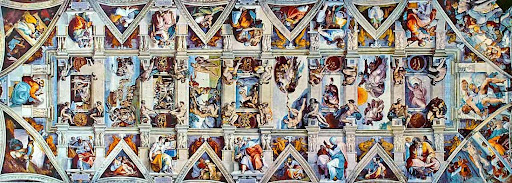
“Rome was transformed into a center of culture, with massive projects funded by papal wealth (from pilgrimages, indulgences, taxes on the Papal States, and other sources). The renaissance period flourished with expressionism, humanist ideologies, and a straying away from the traditional values practiced by the Church.“
The Peak and decline (late 15th–early 16th centuries): “The papacy reached high worldly power (controlling the Papal States in central Italy, engaging in wars, diplomacy, and politics) but also scandal and excess. This fueled discontent, culminating in Martin Luther‘s 95 Theses (1517) and the Reformation.” This came formed a major schism in the church, where former Roman Catholics left the church in protest to the corruption of the papacy.
End of the Renaissance Papacy phase: “The Sack of Rome (1527) by Holy Roman Emperor Charles V disrupted papal projects and prestige. The Council of Trent (1545–1563) initiated the Counter-Reformation, shifting the papacy toward reform and away from Renaissance-style worldliness.“
It must be emphasized that prior to 1054AD, the Eastern Byzantine Empire and the Holy Roman Empire were one, holy, Catholic Church. “The Church was unified in core doctrine, shared the same faith (as defined by the early ecumenical councils), and recognized mutual communion, but significant differences in liturgy, discipline, customs, language, and even some theological emphases had developed over centuries.”
ALL of the nations were once governed and ruled by the Church. Though we do not see a plethora of evidence of this outrightly in our documented history, we are aware that the Vatican Church and the Smithsonian are in possession of a large majority of religious artifacts, books and documents.
If there had been a movement to conceal the truth of the Millennial Reign within the 18th-19th centuries, there is good reason to speculate whether or not the Vatican or Smithsonian were involved in the cover up.
Vatican Apostolic Archive: “This is the central repository for documents of the Holy See (the Pope and the Catholic Church’s central governance). It contains over 85 kilometers (about 53 miles) of shelving with materials dating back more than 12 centuries.”
Smithsonian Institution Archive: “Common claims involve the Smithsonian supposedly hiding or destroying evidence of giant human skeletons (to protect evolutionary theory), ancient Egyptian artifacts in the Grand Canyon, or other “forbidden archaeology” (e.g., lost races or biblical giants/Nephilim).”
According to the mainstream narrative, “the institutions are not broadly “hiding” explosive secrets in a conspiratorial sense. The restrictions only exist for preservation, privacy (e.g., recent records), security, or ethical reasons, but scholars access materials routinely, and digitization and openings continue.”
There is always room for speculation though, we known that history has been severely altered, so we have reason to question what we have been taught/told to accept as truth.
Revelation 20:7-9 “And when the thousand years are expired, Satan shall be loosed out of his prison, And shall go out to deceive the people, which are in the four quarters of the earth: even Gog and Magog, to gather them together to battle, whose number is as the sand of the Sea. And they went up into the plain of the earth, and they compassed the tents of the Saints about, and the beloved city: but fire came down from God out of heaven, and devoured them.”
When I had first read this passage as a new christian, with very little understanding of history, theology etc., I was immediately perplexed that the Lord would openly reign for a thousand years, with his Saints, with a rod of iron, and at the end of it, the nations would somehow still be deceived?
I couldn’t fathom how that would play out. Now, after studying Revelation and church history for several years, I can see clearly that the tribulation was fulfilled beginning in 70AD, the dead were raised, Saints were venerated, the millennial reign prevailed, the church was established and fortified, and within the past few centuries, we see a large digression from all of that greatness that once was. We can only seriously wonder, are we living amidst Satan’s short season?
Today we can marvel at some of these beautifully intricate buildings, with their radium lit fire places.
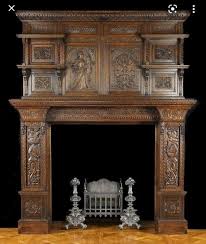
Majority of these buildings have been destroyed, mainly by fire in the 1800’s-1900’s.
Our modern architecture does not compare to the magnificent structures of the past millennia, no matter the “advancement in technology”. The buildings that still stand are typically occupied by prestigious ivy league colleges, diplomatic parties, or private institutions. They were constructed in a time of peace and prosperity, when beauty, harmony and symmetry were the utmost focus.
Here I will list a handful of examples of these romanesque type structures found in the USA from the “Temporary” World Fair Exhibitions, again this is just a handful but there are endless examples of these wondrous buildings:
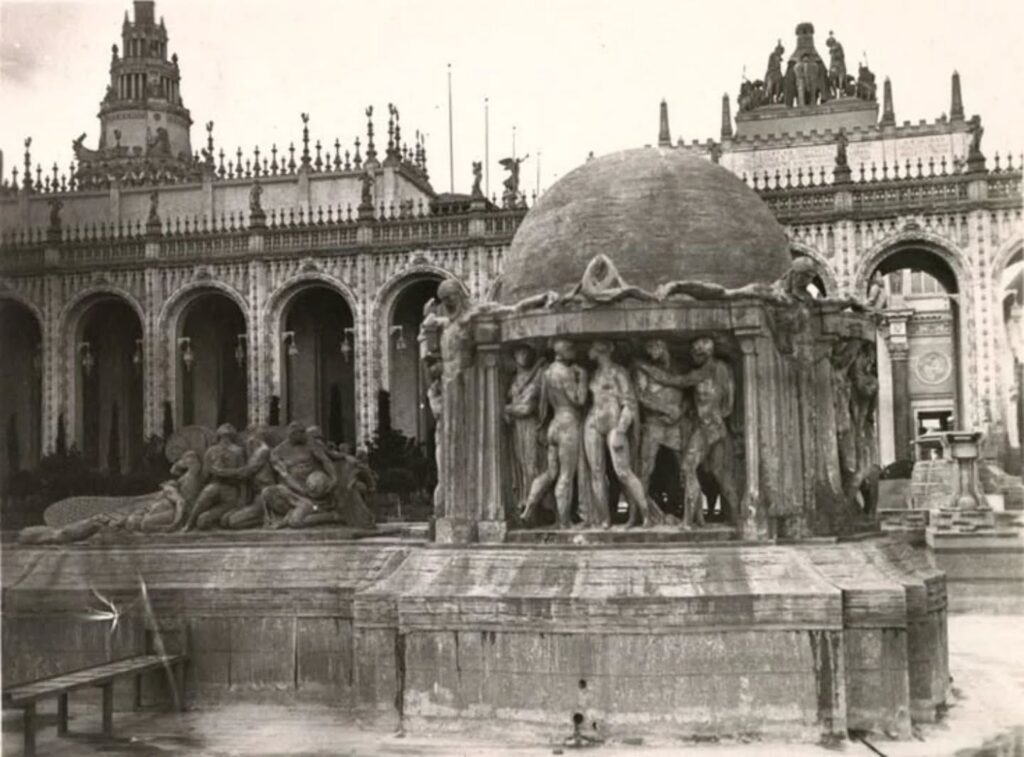
A “temporary” fountain at the Chicago World’s Fair.
Note: It is speculated that these world fairs were orchestrated to showcase the anything but temporary cities that once occupied America, and were shortly destroyed after these world fairs commenced. We should ask, were these fairs simply put on to create a false narrative around the true history of America?


The Chicago World Fair
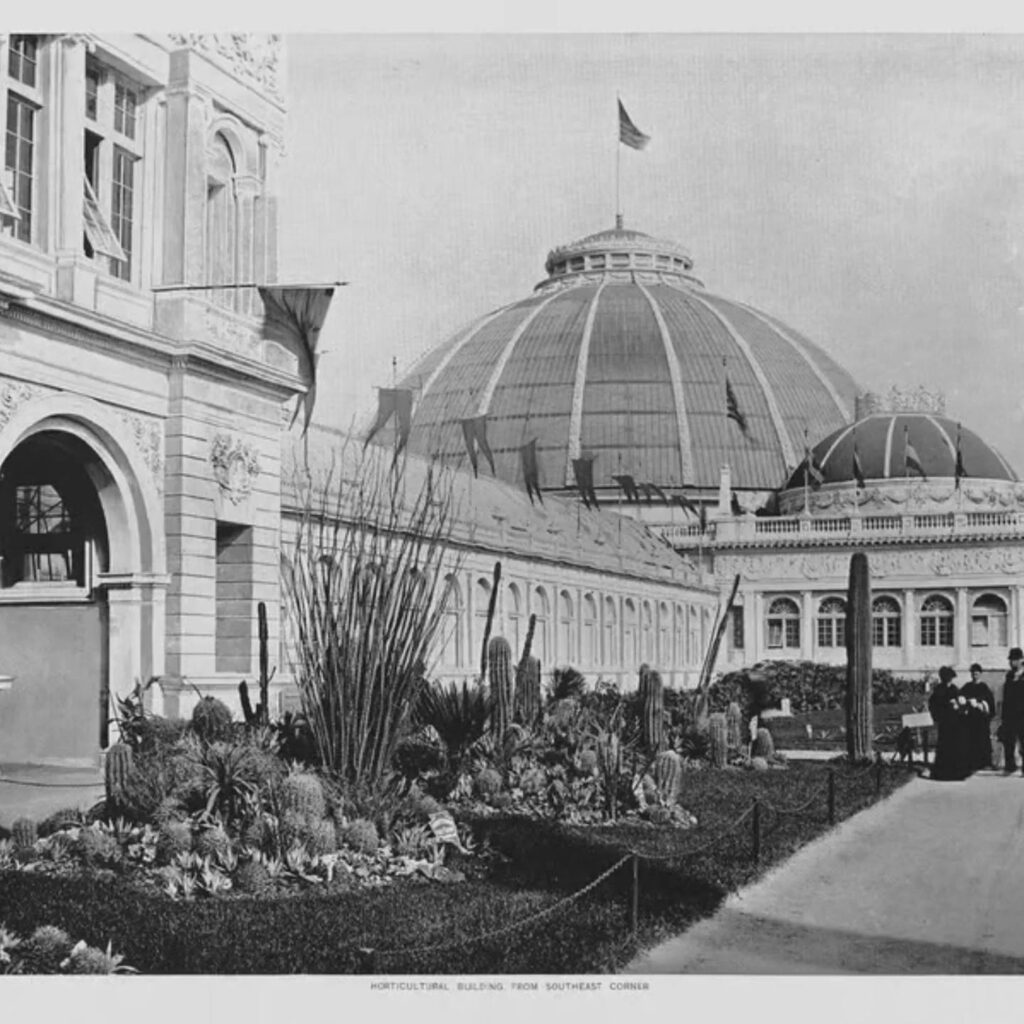
The Horticulture building at the 1893 Chicago worlds fair.
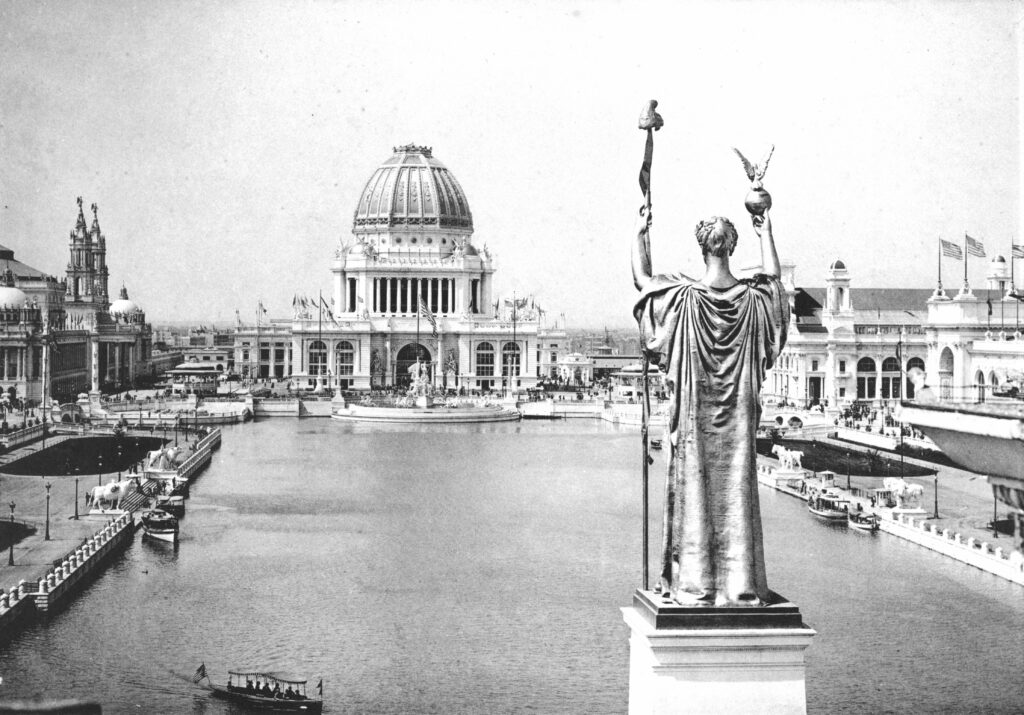
World’s Columbian Exposition
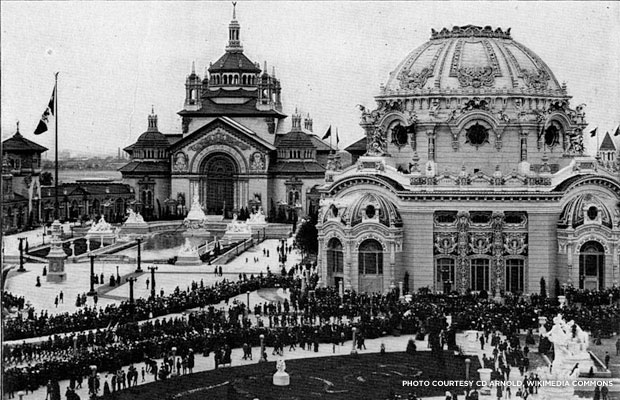
1901 Pan-American Exposition in Buffalo

1904 St. Louis World Fair

The Horticultural Hall at the U.S. Centennial Exhibition in Philadelphia, 1876.
What is with this current “Vulgar Era” (aka CE) that we find ourselves amidst now? Evil runs rampant, greed and self indulgence is rewarded, our architecture is barren and bleak, God has been strategically removed from modern society, literature, entertainment have grown stale. It does have great characteristics of a season of Satanic influence.
